Wood-Look Siding, Soffit and Decking: A Homeowner's Buying Guide
Most homeowners choosing an exterior material are weighing the same four things: will it look right on the house, will it still look right in ten years, how much work is it after it goes up, and who is going to install it. This guide walks through each one for wood-look siding, porch and soffit ceilings and decking in Ontario, with the questions worth asking any supplier before you buy. It is written by YJJNANO, a manufacturer of ASA-capped PVC boards, so read our answers with that in mind. We say plainly where our board is not the right answer.
Start with where it is going
Walls, ceilings and floors are three different jobs, and the board that is right for one is often wrong for another. A wall panel is built to shed rain and hold its colour in direct sun. A ceiling board, under a porch roof or a deck, mostly sits in shade and is judged from below. A deck board is walked on, so it needs to be solid, grip underfoot and take furniture and snow shovels.
Two mistakes come up again and again. The first is using a wall or ceiling panel as a deck floor: it is not a walking surface. The second is expecting a board ceiling under a deck to keep the space dry. The boards may be waterproof, but water gets through the joints; if you want a dry patio under a deck, a drainage layer goes in above the ceiling first. Our under-deck ceiling guide covers that in detail.
Looks: judge it on a finished house, not a swatch
A colour chip on a counter tells you very little. The same board reads lighter on a sunny wall, darker on a shaded porch ceiling, and different again next to brick or stone. Before you decide, look at photos of the colour installed on a real house, ideally on the same kind of surface you are covering, and then hold a sample up where it will actually go.
It helps to pick a direction before picking a colour. For a dark, modern look, Charcoal; dark but warmer, Walnut. For a warm wood tone, Golden Teak or Textured Teak (the difference is the grain, and both are the ones people choose when they want a cedar feel). For something light that is not stark white, Cocobolo; and White for a clean, bright finish. Those are the six colours we keep in stock, from darkest to lightest: Charcoal, Walnut, Golden Teak, Textured Teak, Cocobolo, White.
If you are matching something already on the house, such as an existing deck, trim or a neighbour's siding, a photo in daylight is the quickest way to find the closest board.
Looks in year ten: fading is the real test
Almost every exterior board looks good on install day. What separates them is what the south and west walls look like after years of sun. On a wood-look board, the colour that faces the weather is what you are paying for, so ask what that outer layer is made of and what the warranty says about colour.
Read the warranty closely. Many exterior warranties cover cracking, splitting or rot but say nothing about fading, which is the change you actually see from the street. Ours is 15 years and covers colour fading, measured as a colour change of less than Delta E 5, not just cracking. The outer layer is ASA, the same family of plastic used for car exterior trim because it holds its colour in sunlight.
Upkeep: what you will be doing every few years
Real wood is beautiful and it is a commitment. Cedar suppliers and restoration companies themselves recommend cleaning and re-coating cedar regularly, often every year or two on exposed surfaces, and on a porch ceiling or soffit that usually means a ladder or a lift every time. Over fifteen years, that maintenance can cost more than the boards did.
ASA-capped PVC does not need paint, stain or sealer, and there is no wood in it to rot or split. Expect an occasional rinse to wash off pollen and dust, the same as you would give windows and siding.
Water, mould and Ontario winters
Freeze-thaw is hard on anything that soaks up water. Wood-plastic composites (WPC) contain wood flour, and that wood content can take on moisture over time, which is where swelling, mould and staining start, especially on shaded walls. Foam-core PVC has no wood in it, so there is nothing in the board to absorb water.
Our cladding guide compares ASA/PVC and WPC side by side if a quote you have says composite and you are not sure which one it is.
Cost: compare the whole job, and the next fifteen years
Price per square foot is the least useful number to compare on its own. Two quotes can differ by what they include: corners, window and door trim, finishing strips, delivery and waste. Ask for a total for the job with the trims listed, and make sure the coverage was worked out on the right width.
That last point catches people out. A 6-inch board does not cover 6 inches once the tongue and groove are locked together; ours covers 5.906 inches. An 8-foot board covers 3.94 square feet and a 12-foot board 5.9 square feet. Working it out on 6 inches leaves you short.
Foam-core PVC sits in the upper material class, alongside products like TimberTech Advanced PVC, not in the entry-level vinyl or composite class. Against cedar the board cost is often similar; the difference is the maintenance you are not paying for later.
Finding someone to install it
Many homeowners get stuck at this step: they find a material they like and then cannot find someone to put it up. In the Greater Toronto Area we have certified installers who have done a lot of these jobs. We quote the material, and installation is quoted separately once someone has seen the wall or ceiling and how easy it is to reach, so you always see both numbers.
We install the boards; we do not build structure. If the job needs framing, a new patio cover or a roof first, that is a job for a builder, and attaching a new structure to the house usually needs a permit. Covering an existing wall or ceiling normally does not.
Outside the GTA, any capable carpenter or siding contractor can install these boards. Our contractor guide is written for them and covers fastening, cutting and layout.
Questions to ask before you buy
| YJJNANO's answer | Why it matters | |
|---|---|---|
| Does the warranty cover fading? | Yes. 15 years, covering colour fading (less than Delta E 5), not just cracking. | Fading is what you see from the street. Many warranties only cover cracking or rot. |
| Is there any wood in it? | No. Foam-core PVC with an ASA cap. | Wood content can absorb water, which is where swelling and mould start. |
| Does it need paint, stain or sealer? | No. | On a porch ceiling or soffit, every re-coat means a ladder or a lift. |
| Can I see it on a real house? | Yes. Finished installs on our projects page, filterable by product and colour. | A swatch does not show how a colour reads in sun and shade. |
| Which colours are in stock? | Six: Charcoal, Walnut, Golden Teak, Textured Teak, Cocobolo, White. | Special-order colours can add weeks to a job. |
| Who installs it? | Certified installers in the GTA. Material and labour are quoted separately. | You see what you are paying for each, and can compare installers. |
| How was the quantity worked out? | On 5.906 in of coverage per board, plus corners, windows and doors. | Working it out on 6 in leaves you short. |
| What if I order too much? | Full-length, uncut boards can come back within 30 days (20% restocking fee for a refund, 10% for store credit). | Know the return terms before you round up. |
| Is there a minimum order? | No. Boards are sold by the piece. | You pay for what the job needs, not a full carton. |
The same colours on finished homes
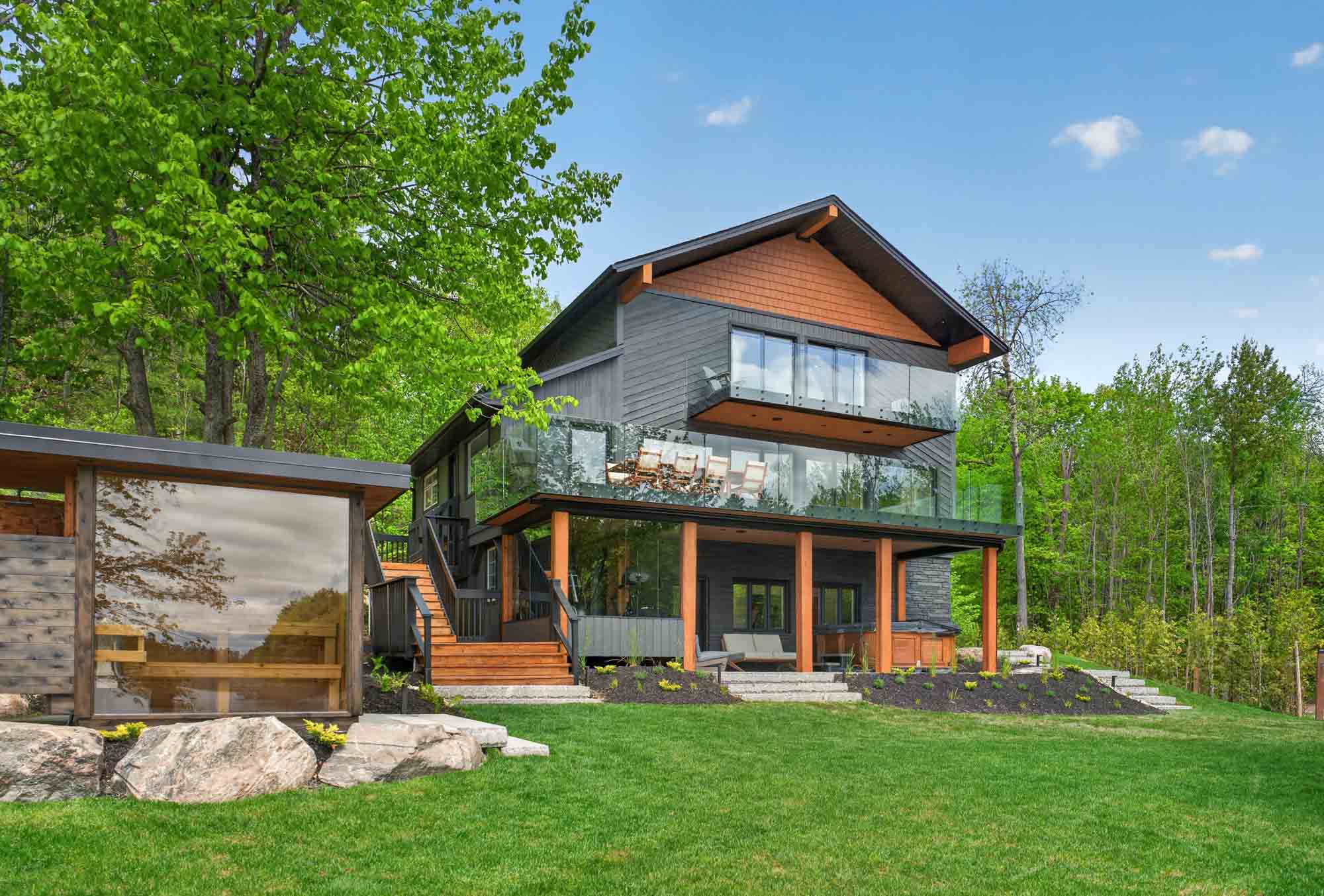
- Wall cladding — Gravenhurst, ON, Textured Teak
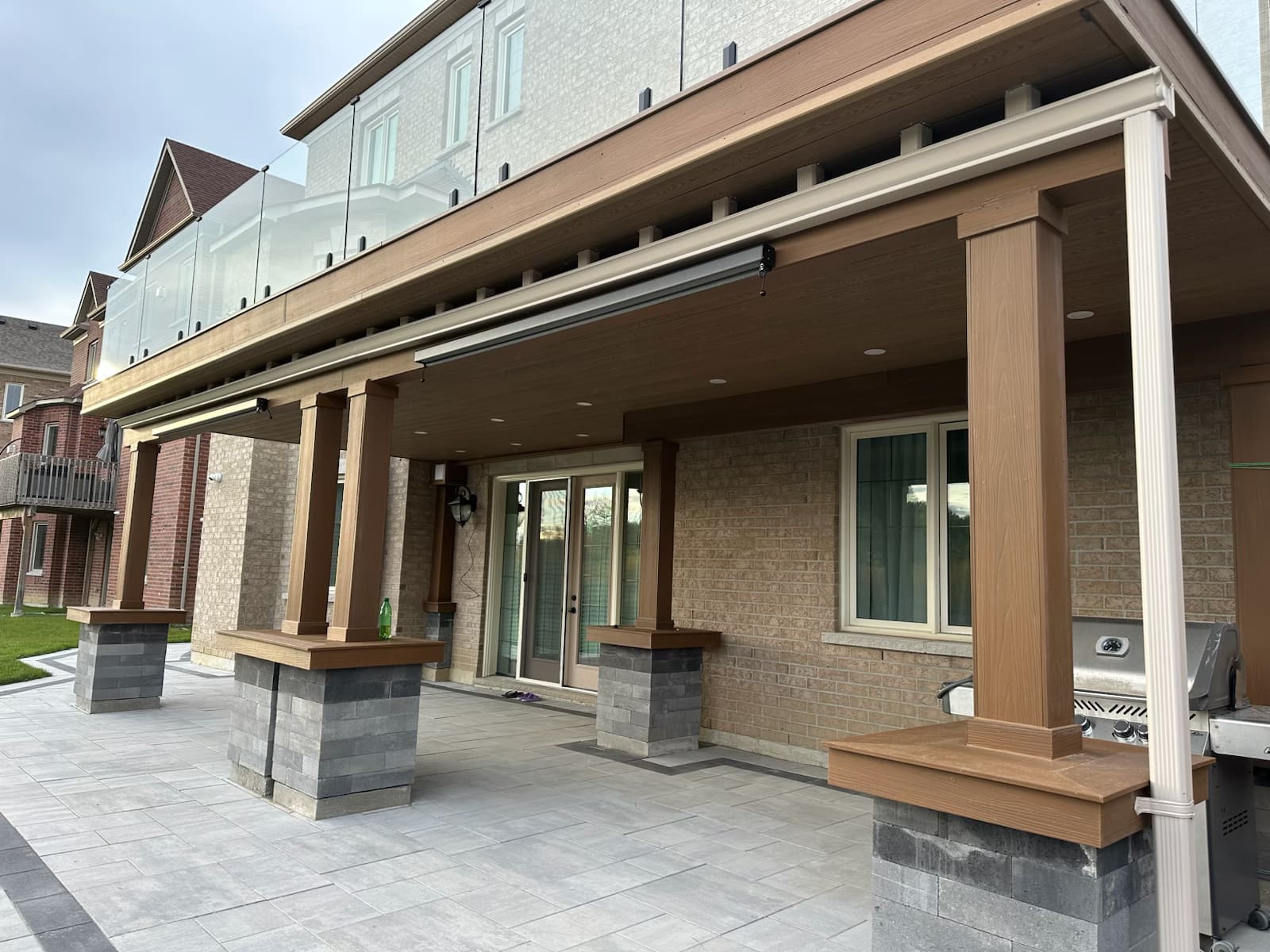
- Under a second-storey deck, with pot lights — King City, ON, Golden Teak
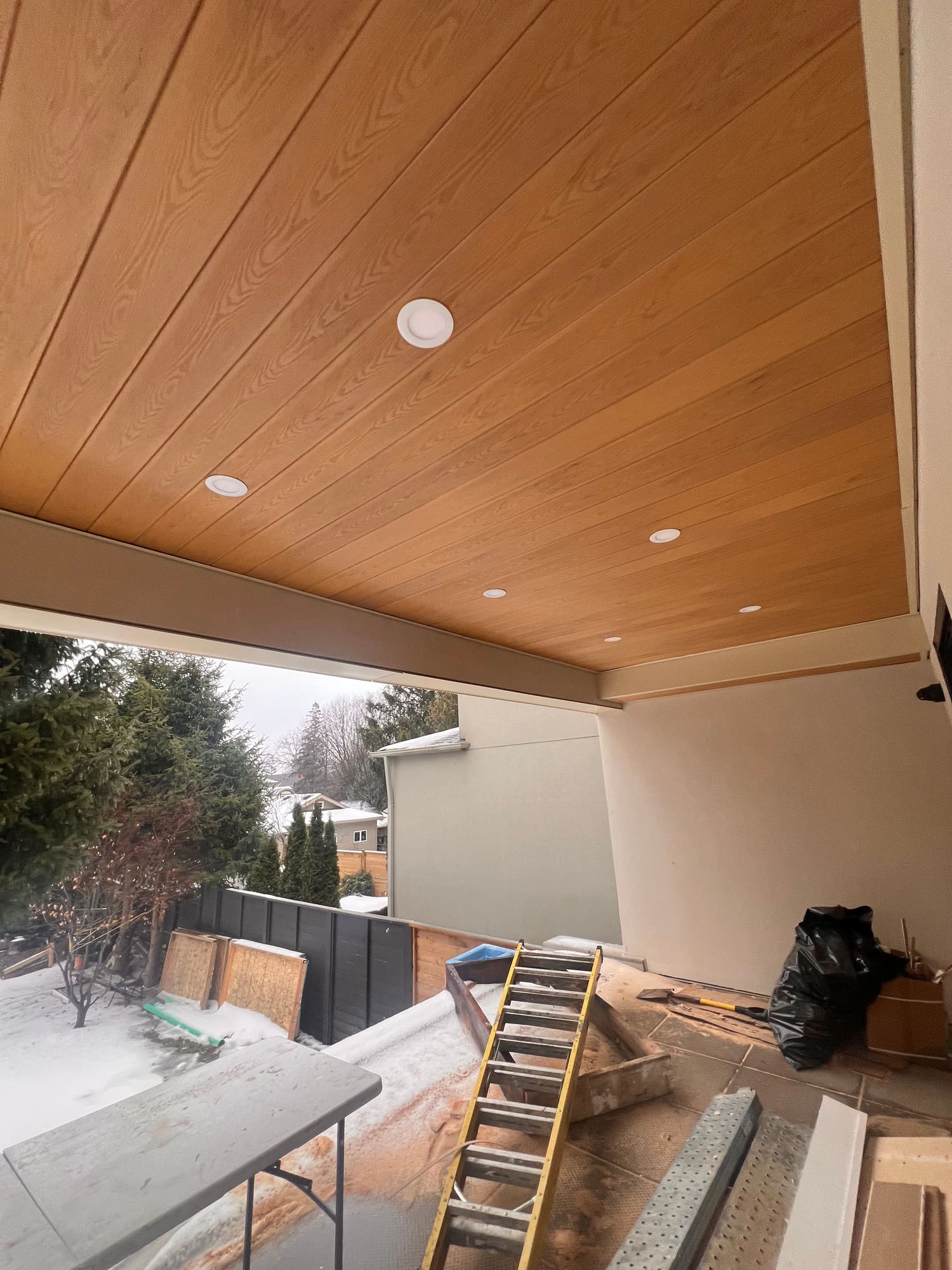
- Covered porch, with pot lights — Etobicoke, ON, Cocobolo
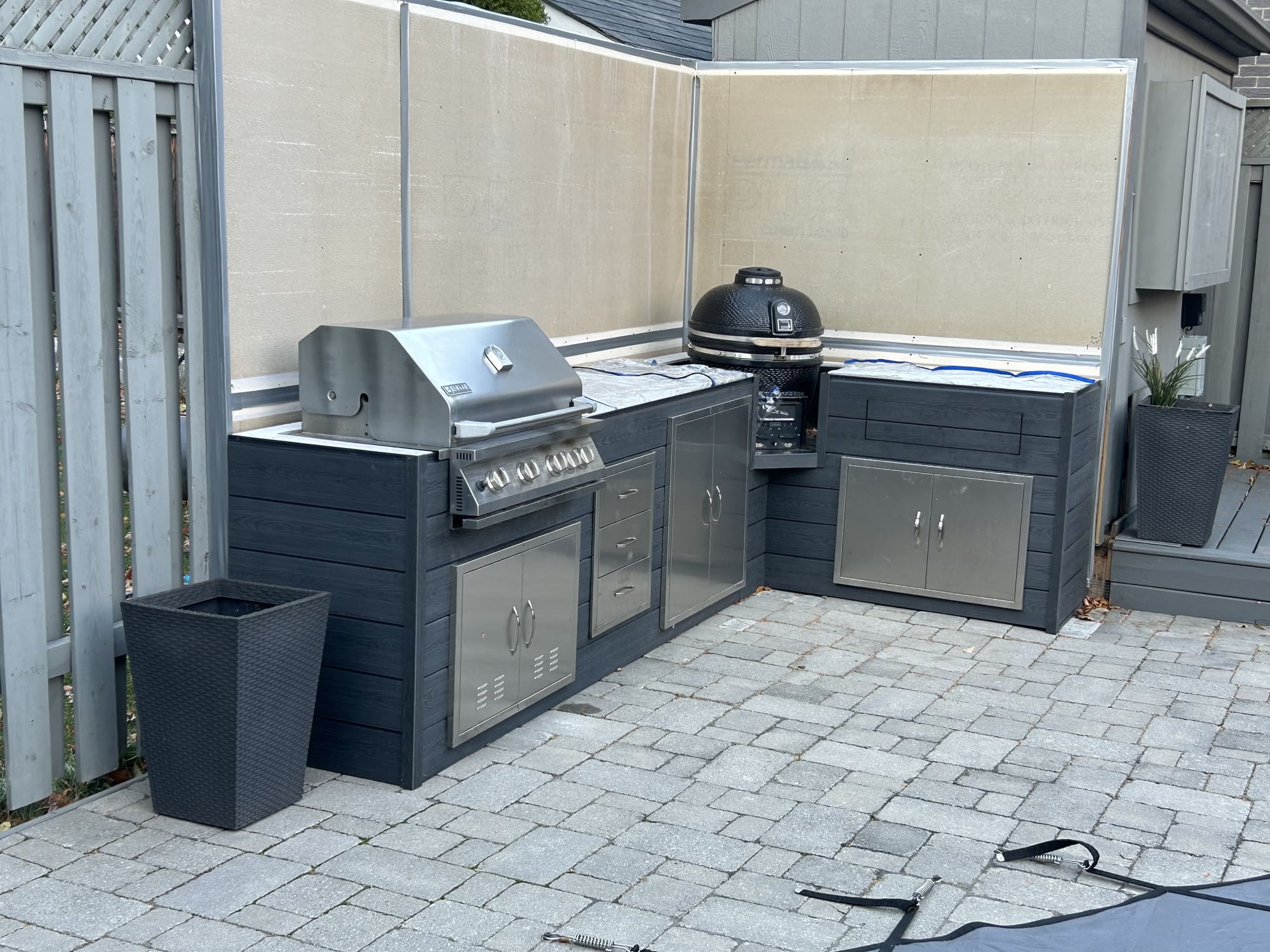
- Wall cladding — Etobicoke, ON, Charcoal
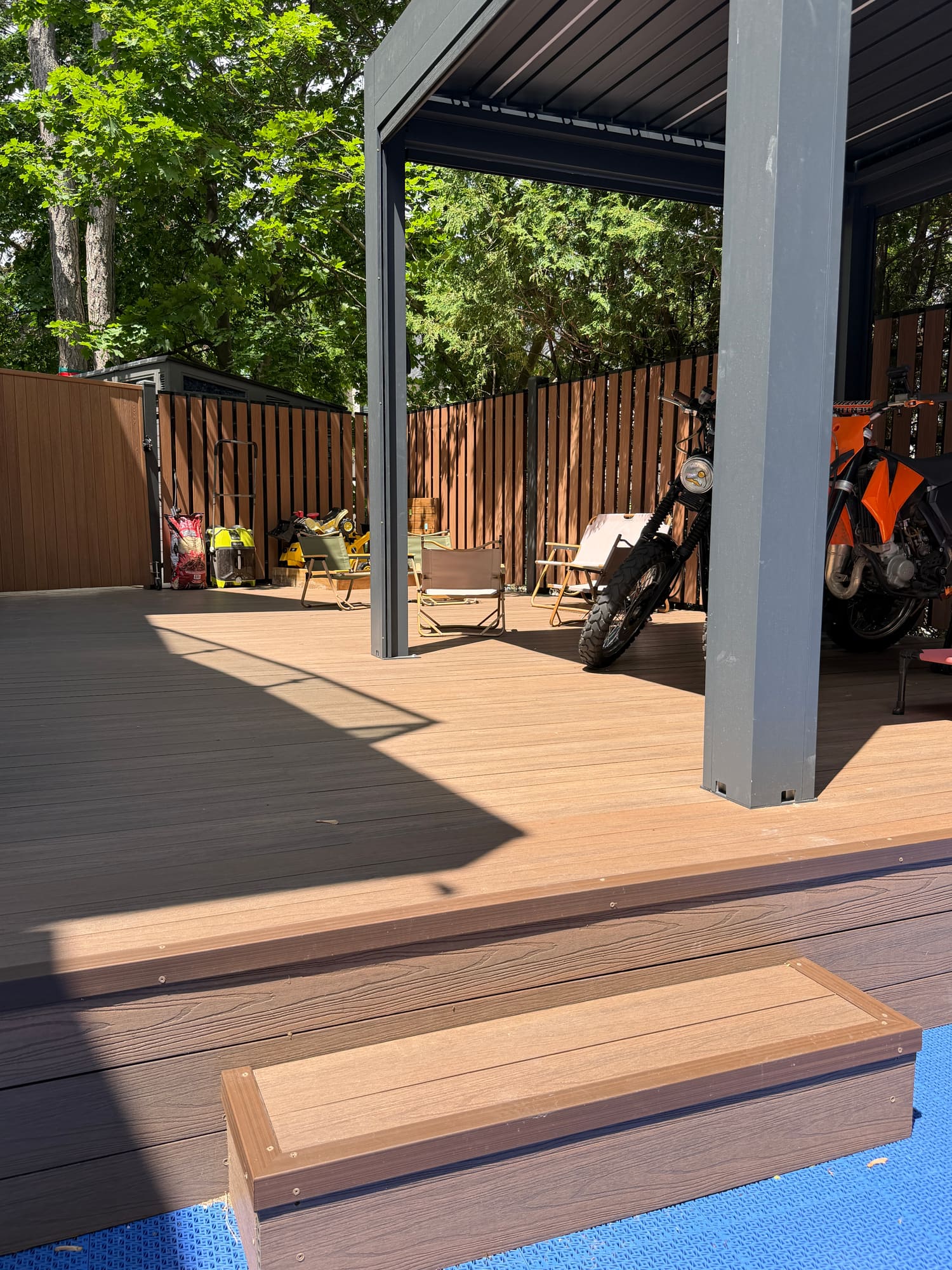
- Deck — York Mills, ON, Walnut
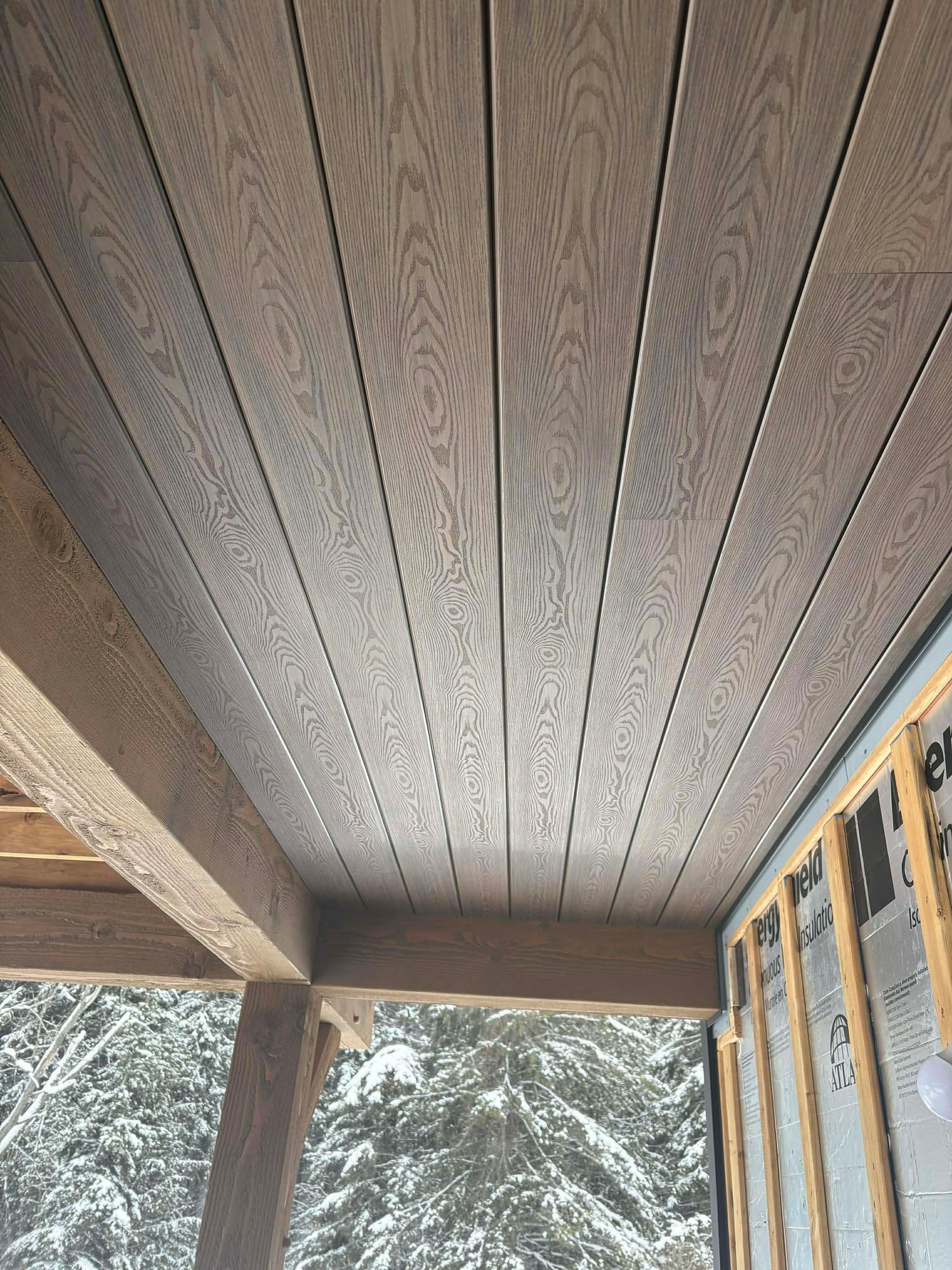
- Porch on a new build — Erin, ON, Walnut
Common questions
How close does it look to real wood?
The boards have a wood-grain texture and wood colours. They are a manufactured board, not timber, and that is exactly why they never need re-coating. Whether the look is right for your house is easiest to judge with a sample in your hand and photos of the same colour on a finished house.
How long will it last?
It is covered by a 15-year warranty that includes colour fading, not just cracking. ASA-capped PVC does not rot, split or need paint, and it is made for Ontario winters.
Will it fade on a south-facing wall?
The outer layer is ASA, which is chosen for exactly that exposure, and colour fading is covered by the 15-year warranty: the colour change is held to less than Delta E 5. The warranty document sets out the details.
Which colour should I choose?
Decide on the look first: dark and modern (Charcoal), dark and warm (Walnut), warm wood (Golden Teak or Textured Teak), light and warm (Cocobolo) or clean and bright (White). Then look at two of them on finished projects and as samples in the place they will go.
Can I match my existing deck or trim?
Send us a daylight photo of what you are matching and we will tell you which board is closest, or come and compare samples against it.
Can I get samples?
Yes. Text 289-512-9895 and pick them up at 200 Telson Road, Markham, or we can mail a set to you.
Will an under-deck ceiling keep my patio dry?
Not on its own. The boards are waterproof but water gets through the joints, so a dry space needs a drainage system above the ceiling. The ceiling is the finish you see.
Do I need a permit?
Covering an existing wall or ceiling normally does not need one. Attaching a new structure to the house, such as a patio cover, usually does. Check with your municipality.
Do you install, or do I need my own contractor?
In the GTA we have certified installers. We quote the material, and installation is quoted separately after the site has been seen. Outside the GTA, any capable carpenter or siding contractor can install it.
Can I install it myself?
Many homeowners do. The wall and ceiling boards are tongue and groove and go up with ordinary flat-head screws, no pre-drilling, and each board hides the screws of the one before it. Our contractor guide covers cutting, trim and layout.
Is it made in Canada?
YJJNANO is a Canadian brand. The boards are made in our own plant overseas and stocked in Markham, so there is no waiting on a ship.
Does a soffit need to be vented?
Usually, yes. We do not make a perforated board; the cleaner way is a continuous vent strip between the panels, which reads as one thin line. Our soffit ventilation guide shows how it is detailed.
Third-party references
- Quality Cedar Products (Canada) — Cedar soffit maintenance
- JD Wood Revival (Southern Ontario) — Cedar restoration and repair
- Wikipedia — Acrylonitrile styrene acrylate (ASA): weathering and UV resistance
- Plastics Technology — Wood-Plastic Composites: Weathering Quality Issues
- TimberTech — PVC vs. Composite Decking
Related guides
- Under-deck and porch ceilings: your options, and the water question
- Porch ceilings: materials, lighting and what lasts
- PVC vs cedar soffit: what changes after five years
- ASA/PVC vs WPC cladding: what actually differs on a wall
- PVC vs PE composite decking: what actually differs
- For your installer: the contractor's buying guide
- Browse finished projects by product and colour
See SoffiWood · Request a quote
YJJNANO Materials Canada Inc.Phone: 289-512-9895
Email: [email protected]
Warehouse: 200 Telson Rd, Markham, ON L3R 1E6, Canada
Serving: Greater Toronto Area, Ontario, and across Canada